- Contact Us
Headteacher
Chris Coyle-Chislett
Email the Office
secretary@penpol.cornwall.sch.uk
Telephone Number
01736 753472
Our Address
2 St George’s Road, Hayle,
Cornwall, TR27 4AH
Headteacher
Chris Coyle-Chislett
Email the Office
secretary@penpol.cornwall.sch.uk
Telephone Number
01736 753472
Our Address
2 St George’s Road, Hayle,
Cornwall, TR27 4AH

If you have a concern about a child please speak to our Designated Safeguarding Officer.



Our school community has a duty to safeguard and promote the welfare of children. This means that we have a Child Protection Policy and procedures in place which are available on the web site or from the school office on request.
All staff, including our volunteers and supply staff must ensure that they are aware of our procedures; parents and carers are also welcome to read these. Sometimes we may need to share information and work in partnership with other agencies when there are concerns about a child’s welfare. We will always ensure that our concerns about our pupils are discussed with their parents/carers first, unless we have reason to believe that this is not in the child’s best interests.

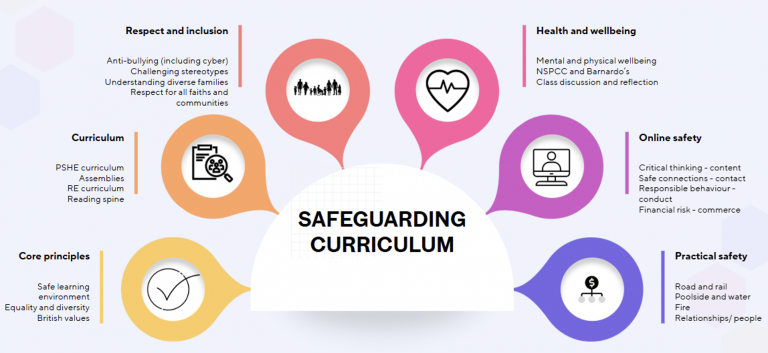
Crofty recognise that our safeguarding duties in schools extend beyond our child protection procedure to proactively keeping children safe. A key aspect of this is our safeguarding curriculum. In Crofty schools this includes not only a broad and balanced curriculum which enables pupils to learn about diversity and acquire the knowledge, understanding and skills that positively impact personal development, behaviour and welfare. Our curriculum aims to equip every school with the knowledge, skills and understanding required for personal safeguarding.
We challenge children to think deeply about safeguarding matters and their own personal physical and mental wellbeing. We value pupils’ questions and give them space for their own thoughts, ideas, and concerns. We give pupils’ opportunities across the curriculum to explore values, personal rights, responsibilities, and equal opportunities that develop moral concepts that impact positively on safeguarding, promote British values and prevent radicalisation and extremism. There are many opportunities throughout our learning in school to explore safeguarding issues.
Practical safeguarding opportunities are planned into the curriculum. For example:
We have developed an open and safe learning environment in which pupils express their views, seek help, and help others. The promotion of equality of opportunity and diversity, for pupils and staff, helps prevent any form of direct or indirect discriminatory behaviour.
Our children learn to not tolerate any prejudiced behaviour. Our behaviour policy promotes making good choices and exhibiting good learning behaviours. Our Crew sessions are a time for sharing ideas, addressing concerns, reflecting on our attributes and promoting important values.
Assembly time, PSHE lessons and class discussions are used to promote personal safeguarding matters and explore themes. For example, we talk about anti- bullying including cyber bullying and British values including how these values are promoted in our multi–faith society. Staff and children are quick to challenge stereotypes and the use of derogatory language in lessons and around the school. Our school reflects the diversity of pupils’ experiences and provides pupils with a comprehensive understanding of people and communities beyond their immediate experience including the role of women in society and different family groups including same-sex couples.
Throughout the curriculum, there are planned opportunities to promote all forms of equality and foster greater understanding of and respect for people of all faiths (and those with no faith), races, genders, ages, disabilities, and sexual orientations, through their words, actions and in their influence. Opportunities are created in a variety of subjects to address areas of safeguarding, for example, themes are highlighted through novels in English lessons.
Time is taken at the beginning of every new school year to reaffirm school values, expectations, and rules for being part of our school. This good start to the year, with everyone clear about their roles and responsibilities, sets the tone for the rest of the year and leads to excellent safeguarding outcomes.

Early Help in Cornwall aims to ensure that services to support children, young people and their parents are there when they need them. Early Help is about identifying problems at an early stage and providing purposeful and effective help as soon as possible once they have been identified, working with families to solve those problems before they get worse.

This page was last updated 5 days ago