
Coding Underwater Adventure Games in Scratch

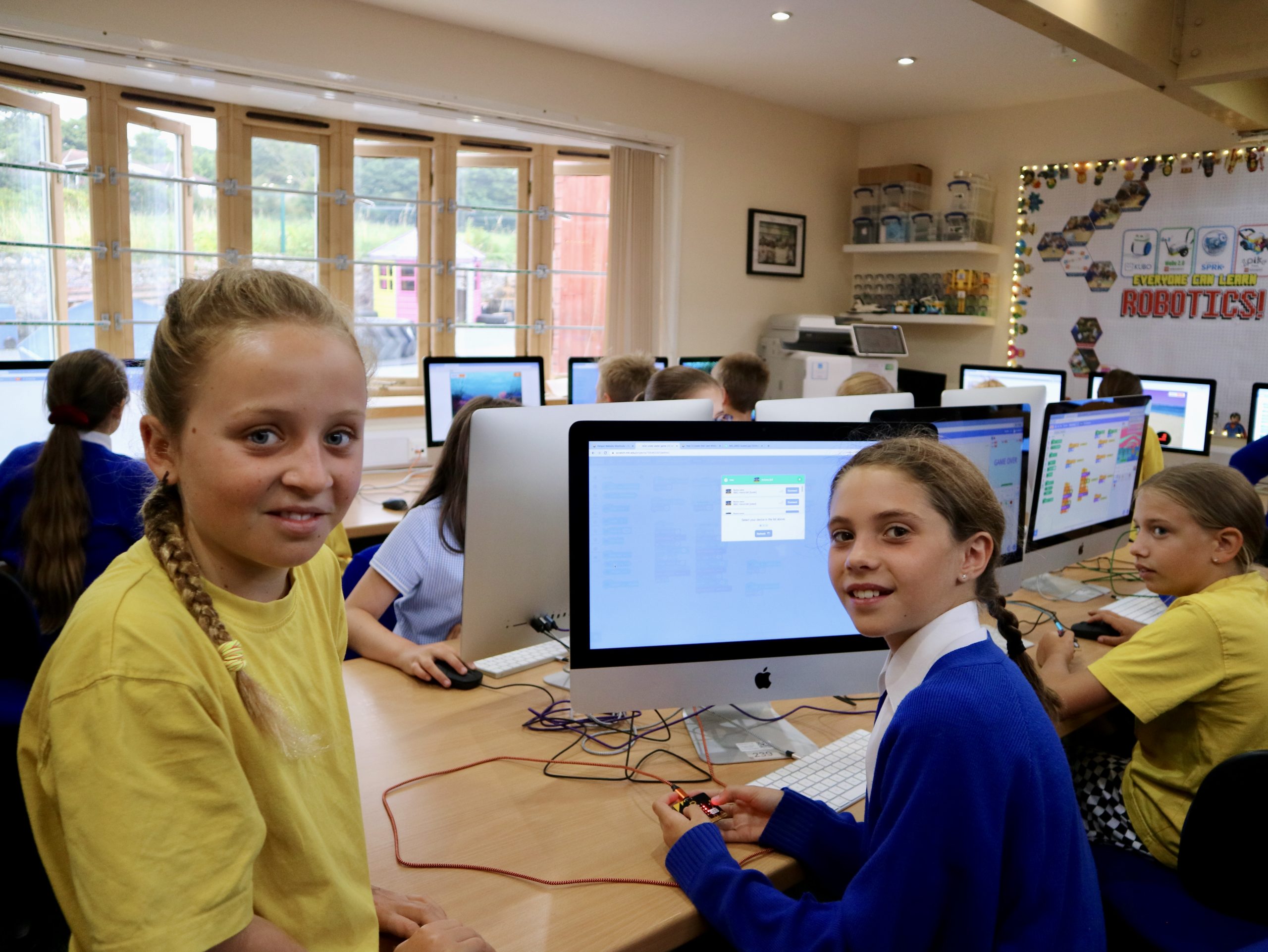
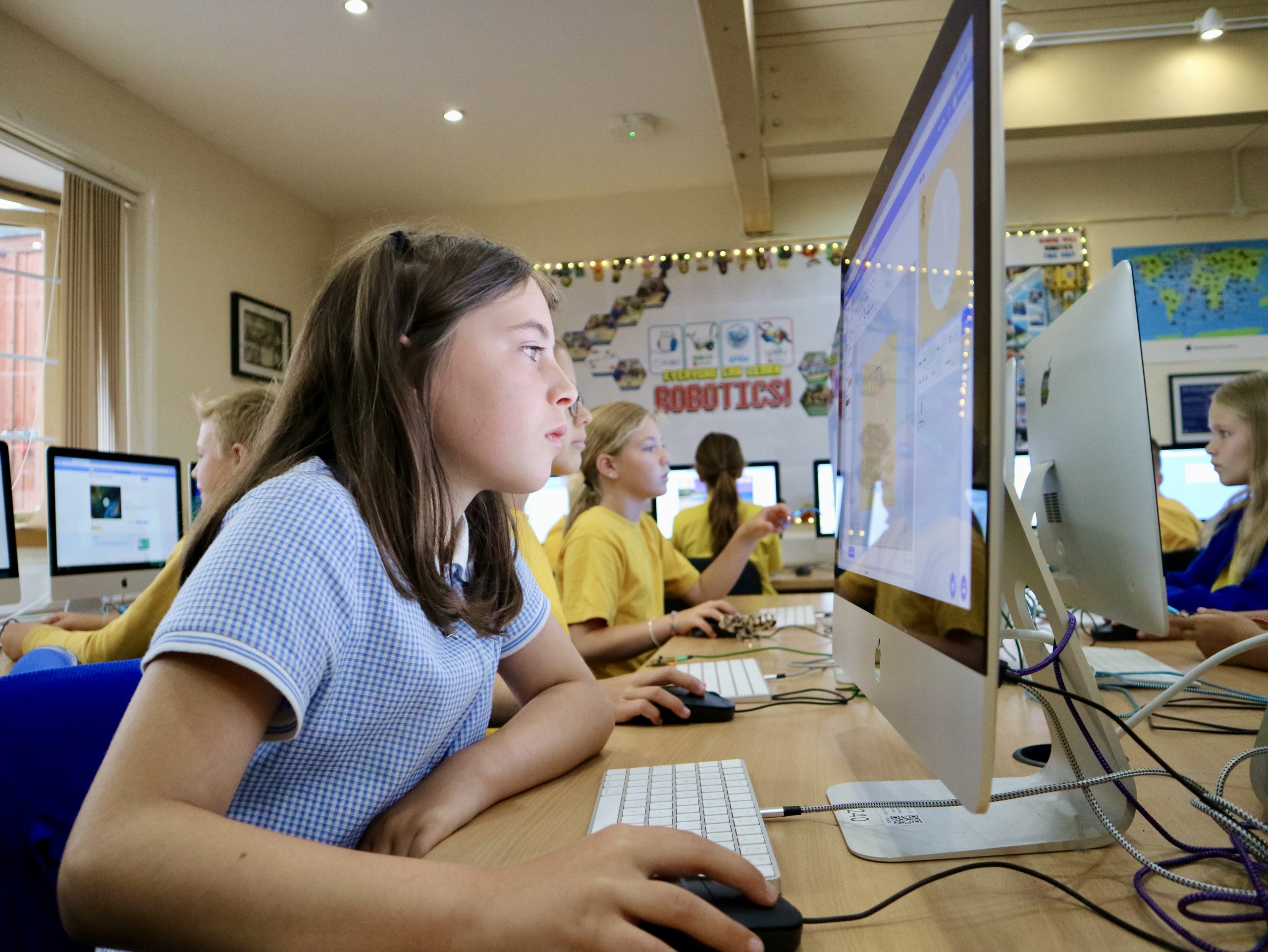
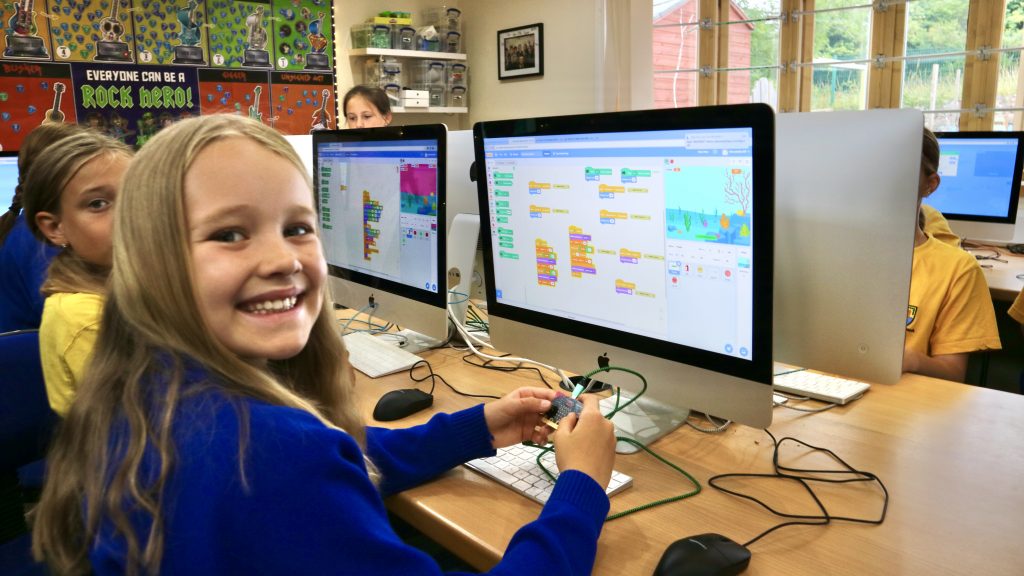
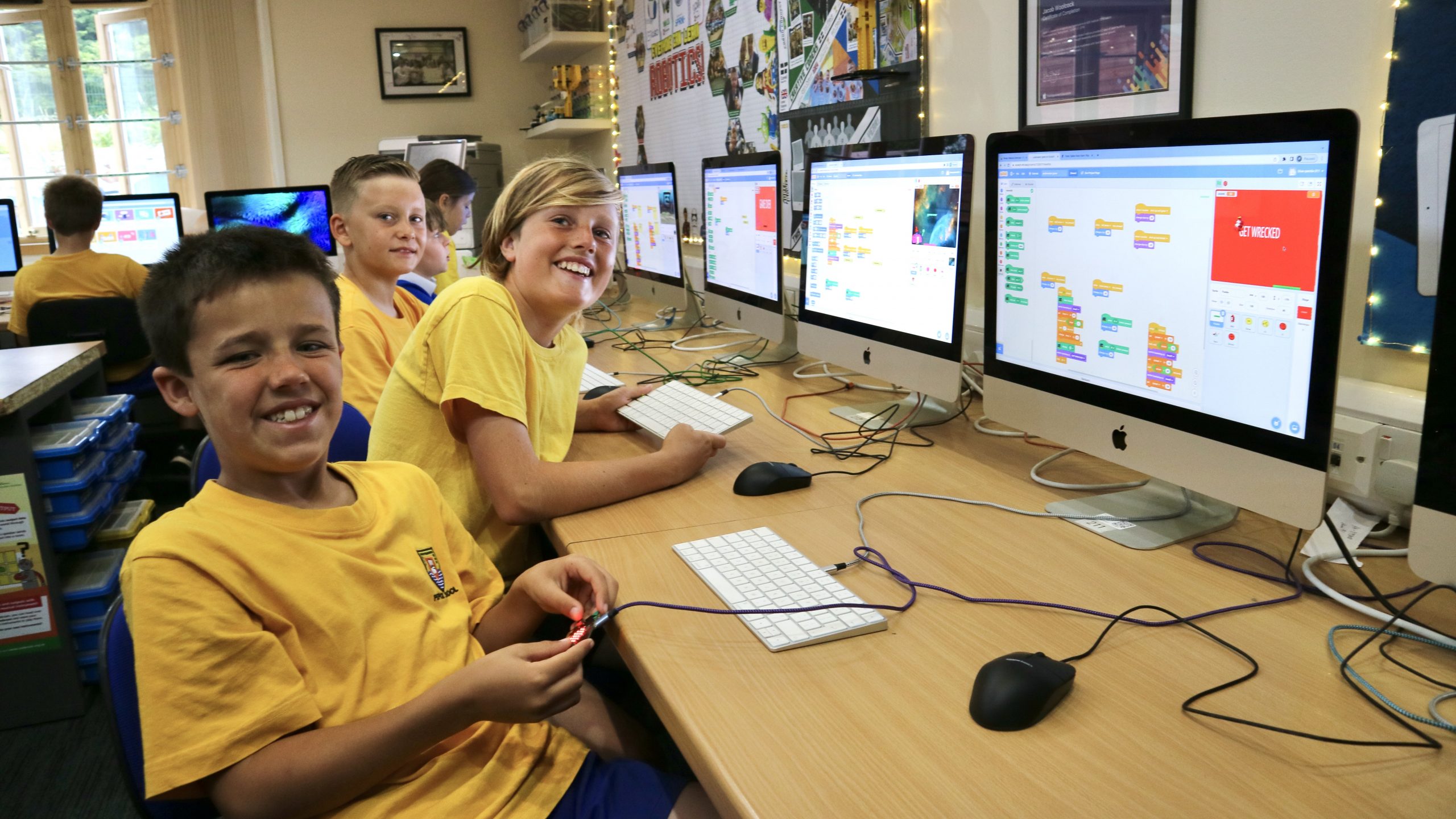
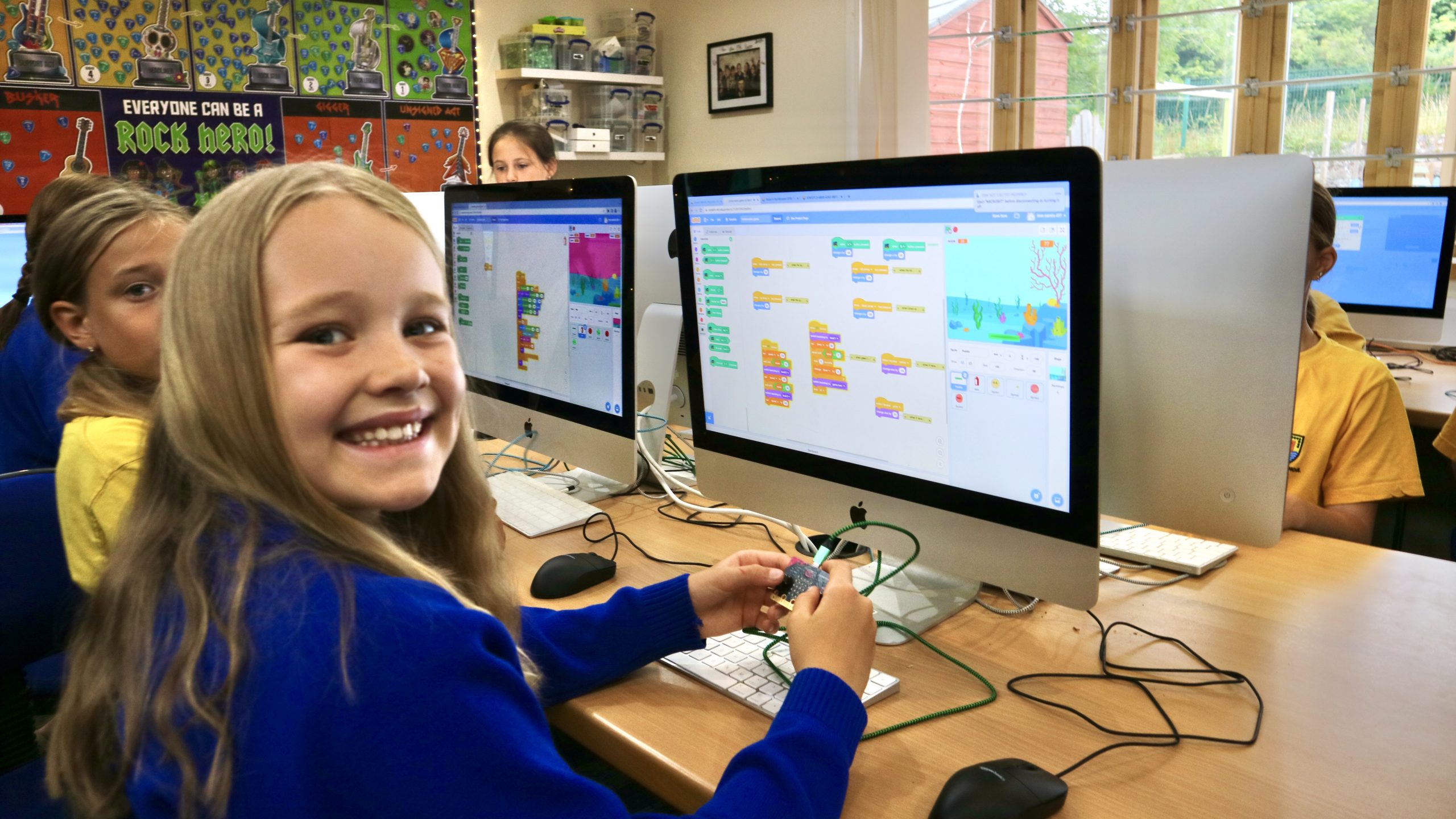
Our Year 5 students have been exploring Scratch this term and learning lots about coding along the way.  From small beginnings, the children have quickly developed a really exciting and creative understanding of just what’s possible in Scratch.

This learning has all come together in the last few weeks with a massive game building project, based on their class topic of a ‘Conservation Conversation‘.  This project started out as a simple ‘falling objects’ type game where they were trying to collect pollution before it hit the bottom of the ocean.  However this quickly developed into something far more interesting thanks to some incredible ideas from the children.  First they wanted to make the game more random, with objects falling at different times in different places.  Then several of them explored the idea of ‘power ups’ that would make the game easier or harder.  The natural next step was to add a variable to hold a Score and after that we decided it would be fun to add a time limit variable to add to the pressure!

But they didn’t stop there – the children then developed even more elements in their games.  Time limited boosters, sneaky tricks to get extra points, objects that immediately ended the game when caught.  The list was endless!

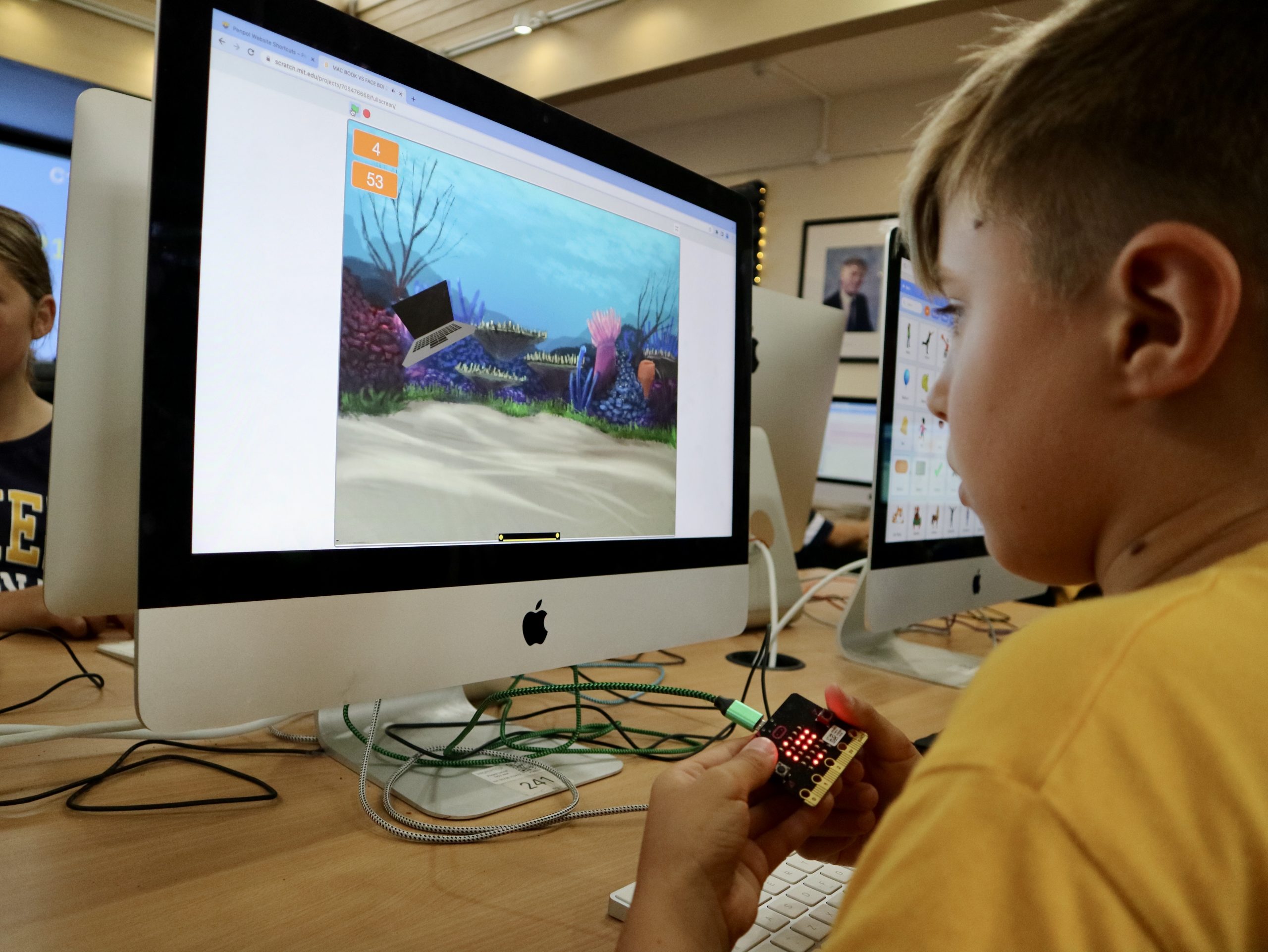
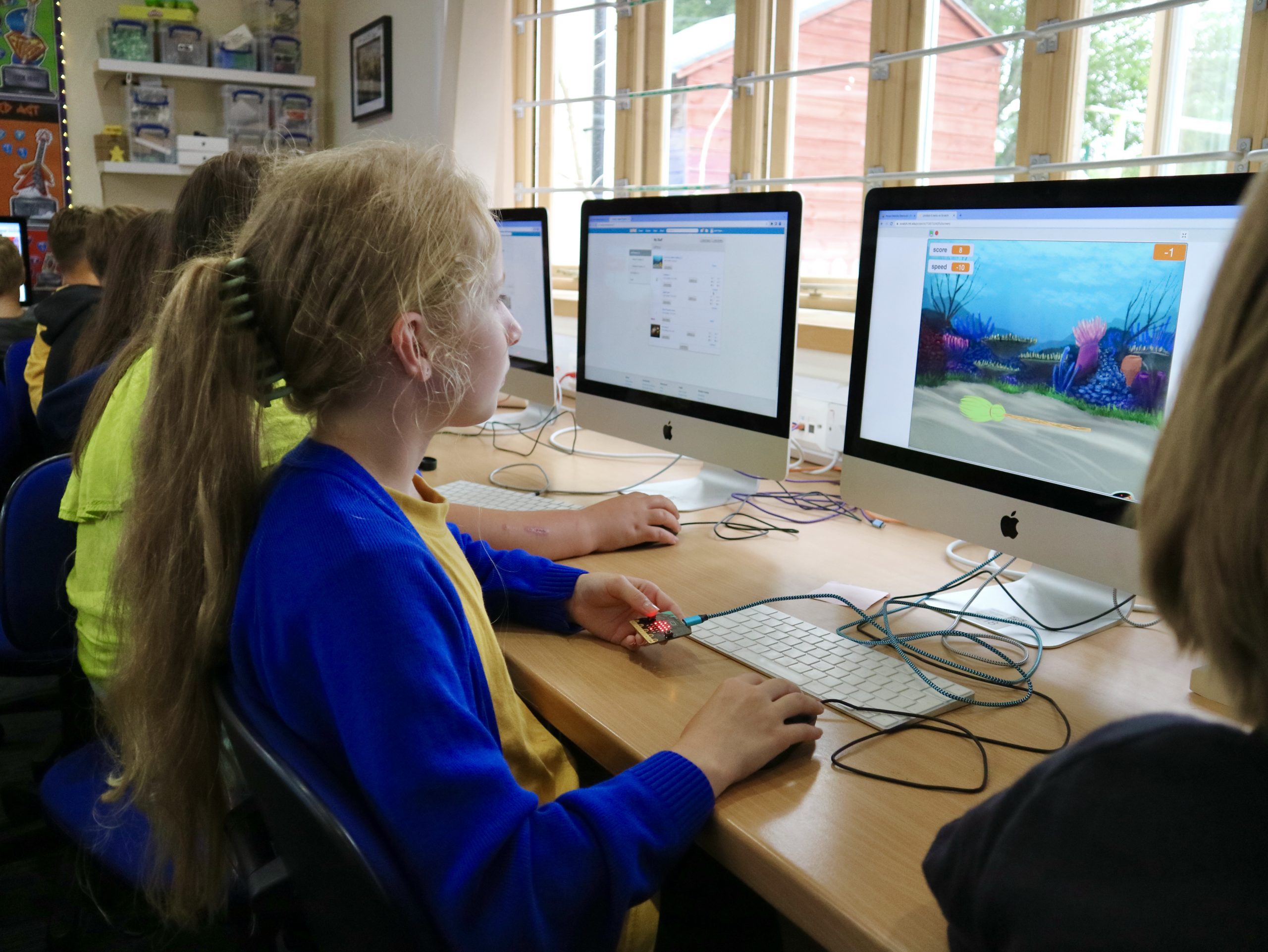
Finally we all came together and explored how a micro:bit could be used as a game controller for these games.  We used buttons as an input, before Rio came up with some quite brilliant code to use the motion sensor too!

This has been a hugely fun project and the children have been problem solving, debugging and creating new code with incredible skill and precision.  They’ve even got into the habit of labelling their code as they go to make it easy to pick up and edit in the future!

Below you can see some of the code they’ve been constructing, as well as some of their games for you to play and enjoy!

For this game you need to use the Arrow Keys to move the paddle along the bottom of the screen.

Catch the pollution but beware of bad power-ups!

Press the Green Flag to start.

"It was really fun, I loved making the games with Mr Woolcock. It was hard work, but fun because we kept adding more to make our games more fun. There was a time when we tried to get the micro:bits to move and I just couldn’t get the right pieces of code to make it move properly, when I figured it out I was so excited that I just kept playing the game for ages!"
Oliver
"It was fun with the micro:bits because it was so cool watching it come to life and play the game with our own controllers. I also liked testing each others games out on Scratch because it was a great way to get more ideas for our own games."
Imogen
Cool Code in these Games

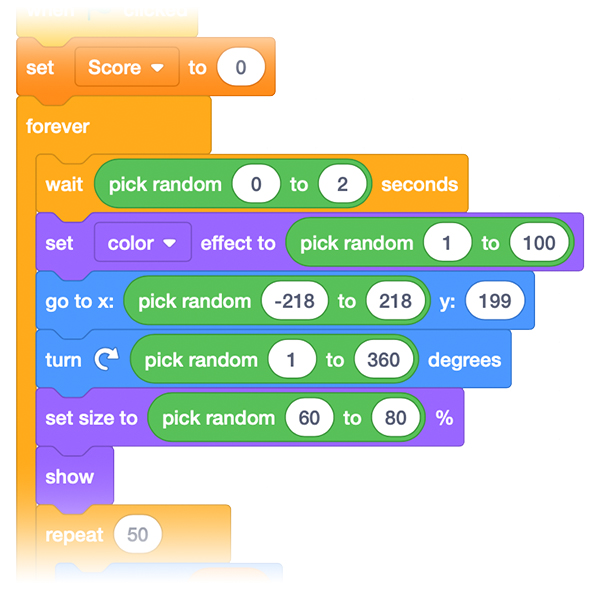
Randomising Game Elements

We quickly discovered that the games would be a lot more fun if we didn't know where or when objects would be falling from. The children explore Random blocks to create rules for the game to follow, but rules which would create an unpredictable outcome.
Variables: Timer, Score and More

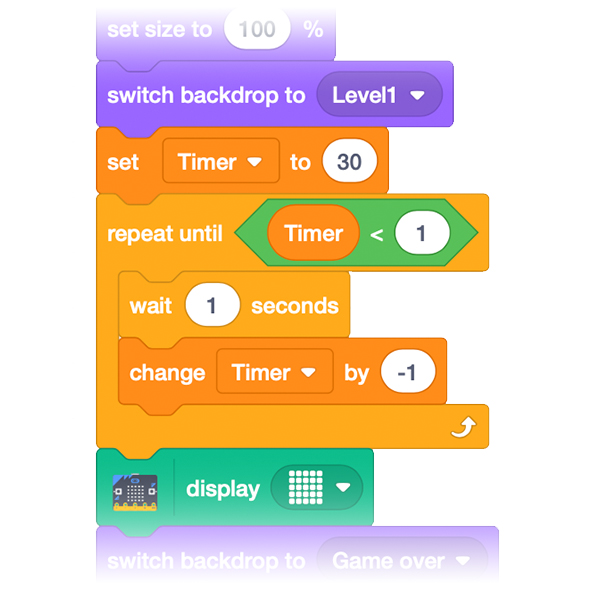
Adding a Score and Timer was a great chance to spend more time exploring Variables. These clever bits of code can change their value at any time, making them perfect for adding five points or taking away a second on the timer. Some children even used the Score variable to trigger new levels starting!
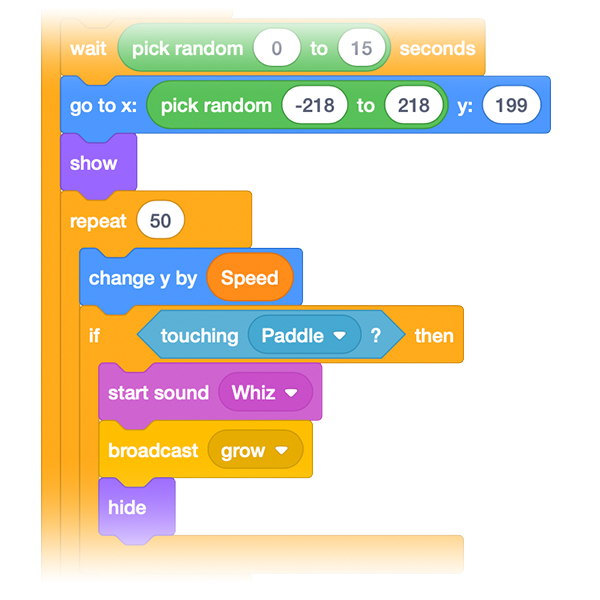
Boosters

As well as pollution falling into the ocean, the children wanted to add other objects which would affect the gameplay in one way or another. Cue objects that add or remove time from the timer, ones which give you bonus points and even ones which make your paddle bigger or smaller. Bonuses, both good and bad, added a whole new dimension to the gameplay.
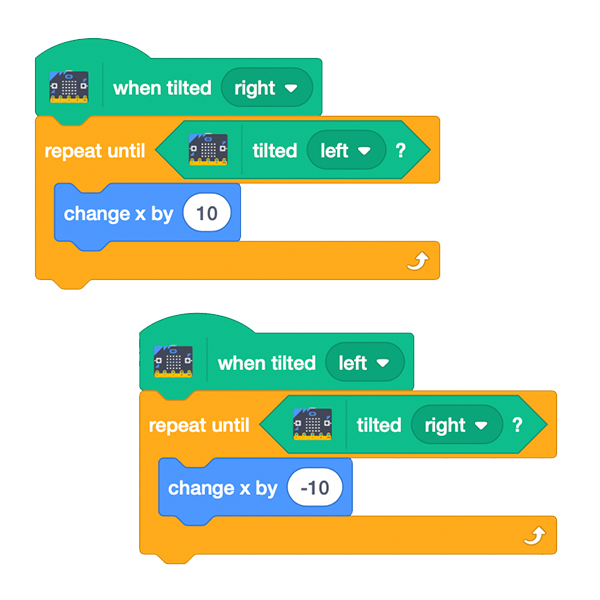
Micro:Bit Controllers

The last part of the project involved connecting our micro:bits to Scratch over Bluetooth to use them as an external gamepad. The children experimented with using the buttons too move left and right before Rio made a breakthrough (with the code above!) to make the tilt sensor work flawlessly. The micro:bits also came in handy for displaying the score and time remaining.
"I’ve really enjoyed this project, it was challenging but it was totally worth it. Trying to figure out where the bugs in my game were was tricky, but eventually I figured it out by using trial and error which helped because it showed me that my timer wasn’t working properly. When I fixed that the game was perfect!"
Maisie
"My favourite thing was exploring the new blocks which I haven’t used before in Scratch, like the micro:bit blocks to control the game. I made lots of choices in my game to make it fun, including where things would go and how quickly they moved!"
Tacita
"My favourite part of making our games was designing the code - especially working with the variables like the timer and the score. These parts make the game a lot more fun because they make it really competitive to play - they were challenging to get working but my friend was able how to make it work a little better."
Lylie

For this game you need to use the Arrow Keys to move the paddle along the bottom of the screen.

Catch the pollution but beware of bad power-ups!

Press the Green Flag to start.

"It was amazing because you got to make a game and play it at school! It was challenging because sometimes getting the right code was tricky, but what I did was (when I calmed down!) I had another look for the blocks I needed and I always managed to find it in the end."
Alex
"My favourite bit of the project was doing the challenges in the code where Mr Woolcock would give us a starting point and it was up to us to make the game elements work."
Caitlyn

Class 11

View all of the games made by
Class 11 on the Scratch Website.

Class 12

View all of the games made by
Class 12 on the Scratch Website.

Also in the news:

Nic Stanlake

Dance Fever hits Penpol!

Class 13 were the last in a long list of children to attend an introductory workshop at Hayle’s own Savvy Studios. Years 4, 5 and 6 have all had the opportunity to take part in two separate

Read More »
Nic Stanlake

Gymnastics at Penpol!

The wintry weather of January and February provides the perfect opportunity for indoor PE. Each year group, from Reception to Year 6, undertakes a gymnastics unit where they learn, develop, and refine their skills. In the

Read More »
Amanda Aspden

Reception visit Heyl Crossfit

The reception classes had a great time at Heyl gym. Louise, our personal trainer, taught us how to do proper squats and we did some bear, frog and duck walking. We also learnt how to swing

Read More »

Also in the news:

Nic Stanlake

Bright Lights and Big City Sights

This last week 44 of our Year 6 pupils boarded the coach and headed off on our big city adventure. An early 7 am departure began the 4 day-long residential trip to our nations capital; for

Read More »
Amanda Aspden

Fun at the Fire Station

The reception classes have had a great time learning about fire saftey at Tolvaddon Fire Station. We had a talk first with fire fighter Robbie who explained to us all about their role as a fire

Read More »
Michael Pearson

Sweet Success: Year 2 Make Honey Flapjacks

This week, our Year 2 classrooms were buzzing with excitement as pupils traded pencils for mixing bowls to create their very own honey flapjacks. The sweet smell of honey and oats filled the air as the

Read More »
Nic Stanlake

Lights, Camera, Action for Class 14

A few weeks ago, some of our pupils visited LightBox Film Company, a local business in Hayle, to provide voice-over work for an Active Cornwall film. This week, it was time to return the favour! James

Read More »